Search for homes in Old Orchard and you'll likely see a median price somewhere around $399,900. Pull up the actual inventory, though, and you won't find a house near that number. You'll find a modest ranch listed in the high $300,000s, or a custom two-story on an acre lot asking $800,000 and up. The middle where that median supposedly sits is nearly empty.
That's not a data error. It's the honest result of averaging two different housing markets that happen to share one name and one set of streets in southeast Sioux Falls.
Two Listings, No Middle
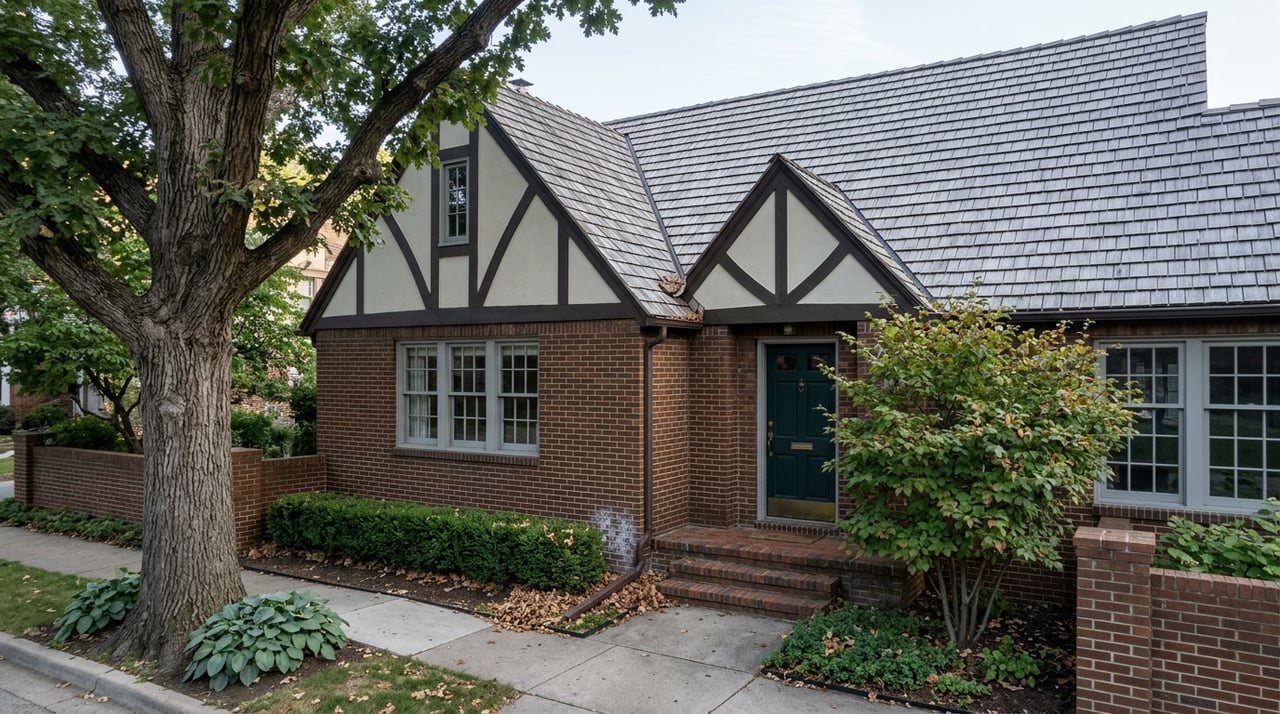
Old Orchard's housing stock splits into bands rather than a curve. On one side sit ranch-style homes and smaller two-story builds, most from the neighborhood's original development era, priced from the high $300,000s to the mid $500,000s. On the other side sit larger traditional and custom-built residences, often on half-acre-plus lots, priced from the mid $700,000s past $1.5 million. The average finished home size across the neighborhood runs around 2,700 square feet, and the median lot size is about half an acre, but those averages blend two very different buyers: someone shopping for a right-sized ranch and someone shopping for acreage and custom finishes.
A median price calculated across both groups produces a number that describes neither. It's the arithmetic midpoint of a gap, not a price tag anyone actually pays.
Why the Number Keeps Changing Depending on Which Page You Load
If you've compared listing sites side by side, you may have noticed the "median" for Old Orchard isn't consistent. One page shows a median near $400,000. Another, pulling from land listings, shows a median closer to $937,000. A third, built from condo and downtown-adjacent listings that get grouped into the same neighborhood tag, shows a median over $1.3 million.
That spread isn't three sites disagreeing about the same market. It's three small, different samples of a neighborhood that doesn't sell very often. A recent snapshot showed only one home selling in Old Orchard in the trailing month, at $710,000, working out to roughly $306 per square foot and 63 days on market. In the same window, five homes with garages sat actively listed at a median price of $799,000, with a typical time on market stretching to 165 days. Compare that against Sioux Falls as a whole, where the median sale price per square foot was $190 and the median sale price was $327,000 over the three months ending May 2026, with homes averaging 41 days on market. Old Orchard runs well above the citywide per-square-foot benchmark, but the exact multiple depends entirely on which handful of sales happened to close that quarter.
When a neighborhood generates this few transactions, any single "median" is a snapshot of whoever happened to sell last, not a stable read on value.
The Line That Actually Separates the Two Tiers
The split between Old Orchard's two price bands isn't simply old versus new. It's renovated versus not. One home in the neighborhood illustrates this directly: built on a foundation from 1962, it was fully rebuilt in 2021 and now competes in the upper tier despite its original bones. The house didn't move up in price because the calendar changed. It moved up because someone reinvested in it enough to erase the gap between original ranch construction and current custom-home expectations.
That mechanism matters more than build year for anyone pricing a home or shopping for one. A 1960s ranch that hasn't been touched competes in the lower band regardless of lot size. A 1960s ranch rebuilt to a modern standard competes in the upper band regardless of its original footprint.
Geography plays a role too. The pocket known locally as Old Orchard Heights, sitting between Southeastern and Bahnson avenues north of 33rd Street, holds some of the neighborhood's largest and most private parcels, and it's where the upper tier concentrates most heavily.
| Lower tier | Upper tier | |
|---|---|---|
| Typical price band | High $300,000s to mid $500,000s | Mid $700,000s to $1.5M+ |
| Typical construction | Original ranch or smaller two-story | Custom-built or fully rebuilt traditional |
| Typical lot | Standard to slightly above average | Half acre to over an acre |
| What sets the price | Condition and finish level | Land, privacy, and river proximity |
What the River Buys, and What It Doesn't
Old Orchard sits along parkland bordering the Big Sioux River, and that geography does real pricing work, but it doesn't work the way square footage does. Pasley Park borders the neighborhood directly and feeds into Norlin Greenway Park, giving residents trail access that eventually connects toward Falls Park and downtown. That river-adjacent privacy, more than raw finished square footage, is a large part of what separates a $500,000 home from an $800,000 one on a similar-sized floor plan.
The neighborhood's everyday commercial life clusters closer to East 26th Street, where Bagel Boy, The Barrel House and The Attic sit within easy reach, along with grocery access nearby. That convenience corridor sits closer to the neighborhood's lower-tier, smaller-lot homes. The upper tier trades some of that walkable proximity for acreage and distance from the street grid, which is part of the tradeoff a buyer is actually pricing in when comparing the two bands, not just bedroom count or finished basement space.
A five-bedroom, five-bath home spanning more than 6,000 square feet near Old Orchard and the Big Sioux River was listed in October 2025, and it reflects the pattern: substantial acreage, formal architectural detail, and proximity to the river corridor rather than proximity to the retail strip.
Which Tier You're Actually Shopping For
If your budget sits in the $400,000 to $550,000 range, you're shopping the lower tier, and you should expect to compete for a small pool of ranch-style listings, some needing updating, in a market where inventory is scarce enough that homes tend to move quickly once priced correctly and hold their value well afterward.
If your budget clears $750,000, you're shopping a different neighborhood in every practical sense. At that level, square footage matters less than lot size, distance from neighbors, and how close the parcel sits to the river's parkland buffer. Two homes with identical finished space can price hundreds of thousands of dollars apart based on which of those factors they offer.
Knowing which tier you're actually in before you start touring saves the frustration of comparing a $420,000 ranch against an $850,000 custom build as if they were competing for the same buyer. They aren't.
Why do different real estate sites show different median prices for Old Orchard? Because the neighborhood generates very few sales in any given stretch, and each site's snapshot draws from a different small slice, sometimes general listings, sometimes land parcels, sometimes condos grouped under the same neighborhood tag. None of those numbers is wrong. None of them is stable either.
Does a lower price per square foot mean a better deal in Old Orchard? Not on its own. A lower per-square-foot number in the upper tier often reflects a larger lot and more land value rather than less house, while a higher per-square-foot number in the lower tier can simply mean a smaller home on a standard lot. Compare within a tier, not across the two.
If you're weighing a ranch that needs work against a custom build on acreage and want to know which one actually fits your budget and your goals, Amanda Buell can walk through Old Orchard's two markets with you and help you figure out which tier you're really shopping in before you write an offer.