If someone asked whether your McKennan Park home sits inside a National Register historic district, would your answer be based on where you think the line runs, or where it actually runs today?
That distinction matters more than it used to. The McKennan Park Historic District was first listed on the National Register of Historic Places in 1984 and expanded once already, in 2003. In the spring of 2025, Sioux Falls' Board of Historic Preservation moved a new boundary increase forward, one that would fold in the remainder of the Boulevard Addition and the W.L. Baker Addition. Whatever stage that nomination has reached since, the direction is clear: this district has grown twice already and was actively growing again as recently as last year. For an owner who bought a house assuming the historic rules stopped a few blocks away, that is not a footnote. It is the difference between a routine sale and one that requires a design review before you replace a roof.
The Line Nobody Repaints
Most people picture a historic district as something fixed the day it was designated, a boundary drawn once and left alone. McKennan Park's history says otherwise. The district exists because Helen Gale McKennan gave the city 20 acres and her home in 1906, and the neighborhoods platted around that gift, including a Boulevard Addition first laid out in 1883 and advertised at the time as the "coming fashionable residence quarter of Sioux Falls," filled in through the 1910s and 1920s. The bulk of the district's houses date to that window, 1910 to 1929, with a meaningful share from the 1930s and 1940s.
What changed in 2025 is that the city's Board of Historic Preservation formally advanced a proposal to widen the boundary again, specifically to capture properties in the Boulevard Addition and W.L. Baker Addition that had sat just outside the line. The board's own meeting record shows the nomination heading toward the State Historic Preservation Office as part of the standard Certified Local Government review process. If you own a home in either of those additions and have never had a conversation with the city about exterior permits, that may be about to change, or may already have changed without your knowing it.
One Block, Two Rulebooks
Designation inside the district is not a blanket status. Every property is evaluated individually and labeled either contributing or non-contributing to the historic character of the area, and that label is decided address by address, not block by block.
The same 2025 board packet that outlines the boundary expansion also shows how granular this gets. A property at 714 E. Wiswall Place was flagged during review because the draft nomination listed it as "contributing" in one field while describing it elsewhere as a structure that "must be considered as not contributing to the character of the district." The board corrected the record to non-contributing. It is a small clerical fix, but it illustrates something sellers should sit with: two houses on the same street, built in the same decade, can carry different classifications, and that classification affects what kind of exterior work triggers city review before you ever list the home.
The Clock Buyers Get Once You Sign
South Dakota law does not treat historic districts specially when it comes to disclosure, but the age of most McKennan Park housing stock puts nearly every seller here into two overlapping disclosure regimes at once, and the timing of each one is different.
Under South Dakota's disclosure statute, a seller has to furnish a completed Property Condition Disclosure Statement to the buyer before the buyer makes a written offer, and if the seller learns of a new material condition between that disclosure and closing, the statement has to be amended in writing. Once a buyer personally receives that disclosure statement or an amendment to it, they have three days to walk away from the deal. The same law also protects sellers who disclose truthfully and in good faith from later liability over a defect they put in writing.
Separately, because most homes in this district predate 1978, federal law requires a Lead-Based Paint Disclosure: the seller has to hand over the EPA's Protect Your Family From Lead in Your Home pamphlet, disclose any known lead hazards, and give the buyer a 10-day window to conduct a paint inspection or risk assessment before they are bound to the contract, unless both sides agree in writing to shorten or lengthen it.
| Disclosure | Who it protects | When the clock starts | Length |
|---|---|---|---|
| South Dakota property condition disclosure | Buyer | The day the buyer personally receives the signed statement | 3 days to terminate the contract |
| Federal lead-based paint disclosure (homes before 1978) | Buyer | Before the buyer signs a purchase contract | 10 days to inspect, adjustable by written agreement |
Two different clocks, two different triggers, and both apply to the same house at the same closing table. Sellers who plan their timeline around only one of them tend to be the ones surprised by a delayed close.
What Happens If You Want a Quick Refresh First
A common instinct before listing an older home is to do a fast exterior pass: new windows, a roof, maybe a small addition to make the floor plan work for a modern buyer. Inside the historic district, any of that work requiring a building permit goes through Board of Historic Preservation review under the Secretary of the Interior's Standards for the Treatment of Historic Properties.
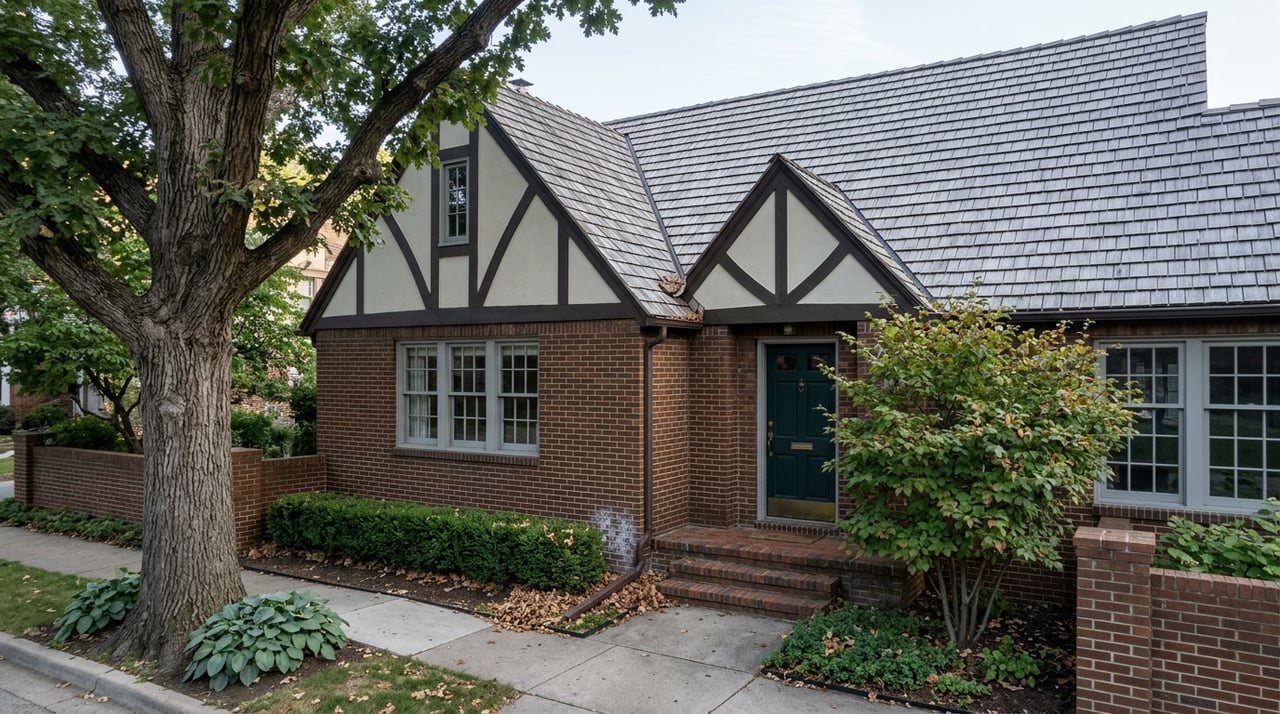
The part that catches owners off guard is the design standard itself. New construction and additions have to be compatible with the surrounding historic buildings in massing, size, and scale, but the state's own rule also specifies that architectural features "must be of contemporary design which does not directly mimic historic buildings." In plain terms, building a look-alike addition that copies the original house's detailing is not automatically the safe choice. The review board is looking for something that reads as clearly new while still sitting comfortably next to a 1921 Tudor Revival or a 1920s Craftsman. That is a harder needle to thread than most pre-listing renovation plans account for, and it is worth a conversation with the city before a contractor starts pulling permits.
The Wiring Nobody Sees Until Inspection
Homes built before 1940 carry a predictable set of inspection findings, and McKennan Park's housing stock sits squarely in that window. Knob-and-tube wiring, ungrounded outlets, and original cast iron or lead plumbing show up often enough in pre-1940s construction that experienced inspectors expect to find some version of it before they walk in the door. None of that makes a house unsellable. It does mean a seller who has an inspection report in hand before listing, rather than reacting to one mid-contract, tends to negotiate from a stronger position.
Locally, Heritage Wiring Solutions has built a specialty around exactly this housing stock, handling knob-and-tube replacement, ungrounded outlet remediation, and aluminum wiring pigtailing while providing the kind of condition assessment that lets a buyer understand what they are inheriting before they make an offer, not after.
What Two Recent Listings Show
Historic status is not only friction. One of the more visible McKennan Park sales this year made the case for the opposite: a 1921 Tudor Revival built for the John Morrell family, whose meatpacking business helped shape the city's early economy, came to market in March 2026 at $1.2 million. The listing leaned into its history rather than around it, highlighting original quarter-sawn floors and what is reportedly one of only three steam-bent cedar shake roofs in Sioux Falls. The paperwork that comes with a pre-1978, historic-district property did not stop that home from commanding a premium. It became part of the pitch.
That is the practical takeaway for anyone preparing to sell here. The disclosure timelines, the design review, the inspection findings, none of it disqualifies a McKennan Park home from a strong sale. It does mean the seller who understands the rules before signing anything moves faster and negotiates from steadier ground than the one who finds out about them during escrow.
A Few Questions Worth Asking Before You List
How do I find out if my home is contributing or non-contributing? The classification lives in the National Register nomination documents and the city's Board of Historic Preservation records. If your street falls inside the Boulevard Addition or W.L. Baker Addition, it is worth confirming your status directly rather than assuming based on your neighbor's.
Does any of this apply if my house was built after 1978? The federal lead-paint disclosure would not apply, but if the property sits inside the historic district boundary, exterior permit work still goes through the same design review regardless of the home's age.
Can I still renovate before I list? Interior work is unaffected. Anything exterior that requires a building permit inside the district boundary should go through the city's historic preservation review first, which is easier to plan for than to unwind after the fact.
Selling a historic home in McKennan Park rewards preparation more than most transactions do. Knowing which side of a shifting boundary your address falls on, which disclosure clock starts when, and what a design review actually expects from an addition puts a seller ahead of the timeline instead of reacting to it.
If you are weighing a sale in McKennan Park and want a clear read on where your specific address stands, Amanda Buell can walk through what your property's history means for the process, and put together the kind of pricing and presentation strategy that turns an older home's paperwork into part of its story rather than an obstacle to it. Request your personalized home valuation to start.