In November 2024, a four-bedroom home at 2605 S Arcadia Rd went on the market for $390,000. Three weeks later it was under contract. When it finally closed in January 2025, the price on paper was $365,000. That's a $25,000 gap between what the seller asked and what the buyer paid, on a home that moved to contract in under a month. Fast doesn't always mean full price, and in Arcadia Heights, that particular arithmetic keeps showing up.
If you've been comparing Sioux Falls neighborhoods by scrolling median prices, Arcadia Heights probably looked like a bargain. It is, but not for the reason most buyers assume. The discount isn't sitting in the dirt or the address. It's sitting in the walls, the cabinets, and the wiring, and understanding that difference changes what kind of buyer this neighborhood actually rewards.
Three Sales, One Repeating Number
Pull the closed sales on S Arcadia Rd from the past four years and a pattern holds steady enough to stop being coincidence.
| Address | Sold Price | Sold Date | Square Feet | Price per Sq Ft |
|---|---|---|---|---|
| 2712 S Arcadia Rd | $296,000 | Dec 2022 | 2,286 | $129 |
| 2605 S Arcadia Rd | $365,000 | Jan 2025 | 2,394 | $152 |
| 2608 S Arcadia Rd | $375,000 | Aug 2026 | 2,494 | $150 |
Three homes, three years, three different buyers and sellers, and the per-square-foot number lands in the same narrow band every time: $129 to $152. That's not a fluke of one soft listing. That's a neighborhood-level ceiling that keeps asserting itself no matter what the asking price says.
Compare that to the city as a whole. Sioux Falls' median sale price per square foot ran $190 over the three months ending in May 2026, and a separate measure of active listings in June 2026 put the citywide average closer to $204 per square foot. Either way you slice it, Arcadia Heights is closing $40 to $75 per square foot below what the rest of Sioux Falls is paying for the same square footage.
Run that gap across a typical 2,300 to 2,500 square foot home in the neighborhood and you get a spread of roughly $115,000 to $170,000. That's not a rounding error. That's the size of the question every buyer looking at this neighborhood needs to answer: what is the market pricing in, and is it something you want to pay for later or avoid paying for now?
What the Location Isn't Discounting
Before assuming the discount is about the neighborhood itself, it helps to rule out what it isn't. Arcadia Heights sits inside the loop of Sioux Falls' 36-mile paved Recreation Trail, giving residents direct trail access without leaving the neighborhood. Listings in the area routinely cite walk-to-school distance, with Robert Frost Elementary and Patrick Henry Middle School both within range, and quick access to the interstate for anyone commuting across the city. None of that has changed. None of that explains a $40 to $75 gap in price per square foot.
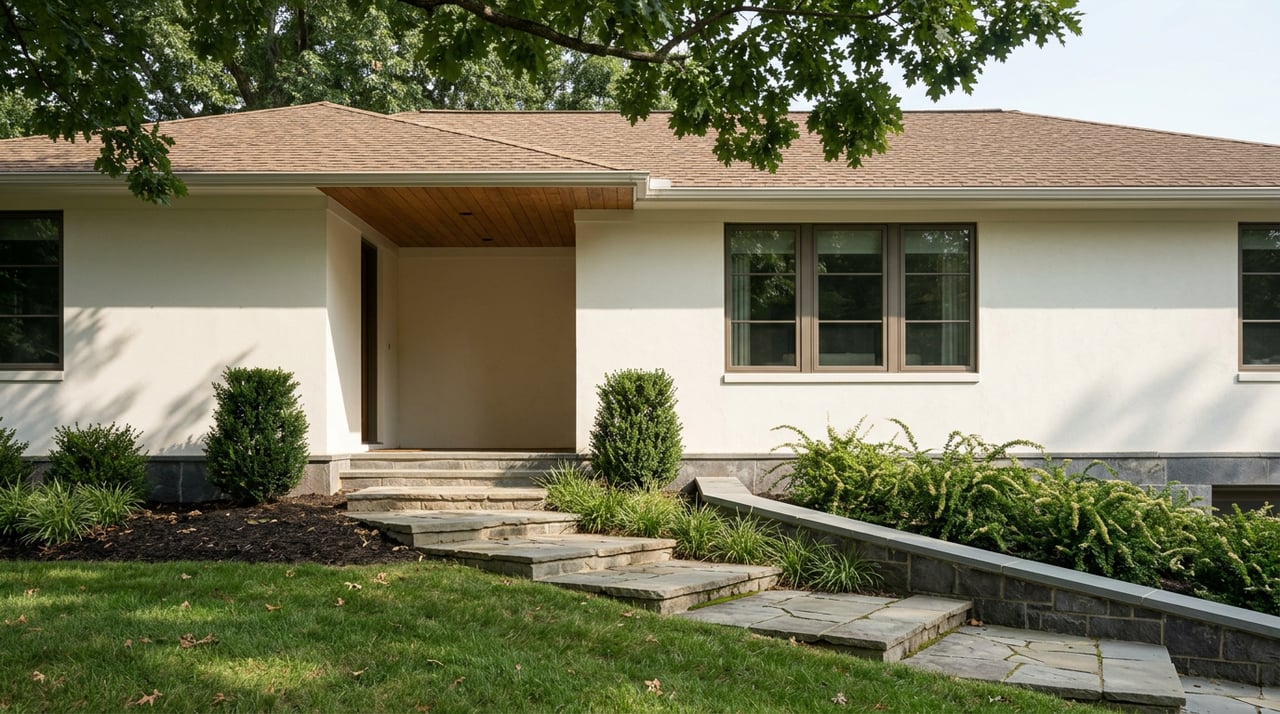
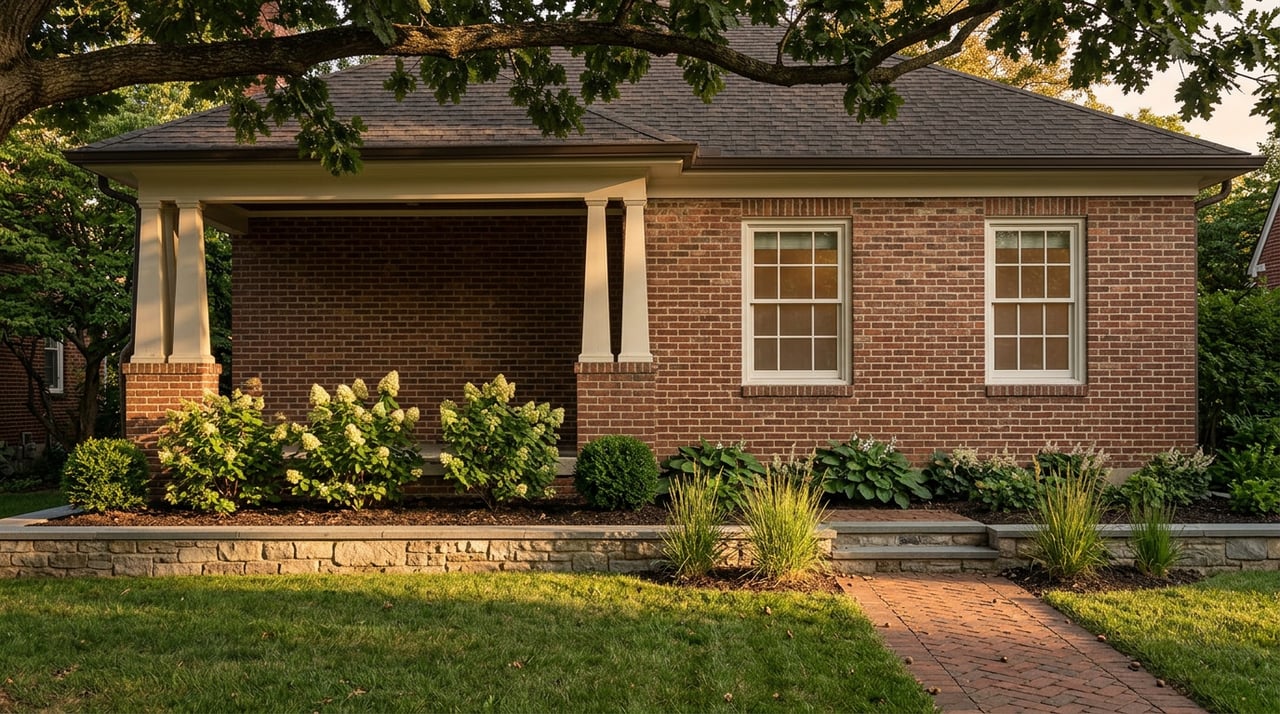
What has changed, or rather what hasn't changed since the homes were built, is the housing stock itself. The 2608 S Arcadia Rd sale that closed in August 2026 was built in 1964. That's typical for the neighborhood. Arcadia Heights was largely built out in the 1960s and 1970s, and a home from that era carries a different set of bones than one built in the newer subdivisions on the city's edges where the $190 to $204 per square foot average is being set.
What $50 a Foot Actually Buys You
A 1964 or 1970s-era ranch was built to a different standard than a home framed in the last fifteen years, and that standard shows up in specific, predictable places. Kitchens from that era were sized for a single cook and built around appliances a third smaller than what's standard today. Bathrooms typically got one full bath and one half bath, not the double-vanity primary suites that newer construction treats as default. Electrical panels, furnaces, and water heaters have often cycled through at least one full replacement by now, and the ones that haven't are due.
None of that makes these homes lesser. It makes them a different product than a 2015-built home three miles away, and the market is treating them accordingly. The per-square-foot gap isn't a penalty for being in Arcadia Heights. It's the cost of bringing 1960s-era systems and finishes up to a standard that newer construction includes automatically, priced in at the point of sale rather than absorbed by the seller before listing.
The Math a Buyer or Seller Should Actually Run
For a buyer, this cuts a specific way. If you're comparing Arcadia Heights to a newer subdivision purely on sticker price, you're comparing two different products, not two prices for the same house. The $50 per square foot you're not paying at closing is a budget line you're inheriting, whether that shows up as a kitchen remodel in year two or a furnace replacement in year one. Buyers who go in with that budget already mapped out get the upside: sweat equity in a neighborhood with genuine trail and school access, at a basis well below what a comparable finished home costs elsewhere in the city.
For a seller, the lesson runs the other direction. Pricing a 1964 ranch as if it competes on the same per-square-foot basis as a 2015 build is how a listing ends up cutting $25,000 off its ask after a few weeks on the market, the way 2605 S Arcadia Rd did in late 2024. The homes in this neighborhood that outperform the $129 to $152 band tend to be the ones where the seller has already closed part of that gap, through an updated kitchen, refinished floors, or staging that shows a buyer exactly what the space can become rather than asking them to picture it. That's a strategy question as much as a pricing one, and it's where a design-forward listing plan earns its keep in a neighborhood like this.
A Couple of Questions Worth Asking
Does a lower price per square foot mean Arcadia Heights homes are undervalued? Not exactly. The homes are priced appropriately for their age and condition relative to newer stock elsewhere in the city. The value is real, but it comes with a renovation timeline attached, not as a bonus on top of an already-finished product.
Will every ranch-era home in the neighborhood carry the same gap? No. A home that's already had its kitchen, baths, and mechanicals updated will price closer to the citywide average, because it's no longer competing on 1964 terms. The gap shows up hardest on homes still carrying original systems and finishes, which is most of them, but not all of them.
If you're weighing a home in Arcadia Heights against something newer across town, the number that matters isn't the sticker price. It's what that price is quietly asking you to spend next. Amanda Buell can walk you through what that number looks like for a specific address, and what a design-led plan to close that gap could mean whether you're buying into it or selling out of it. Request your personalized home valuation to see where your Arcadia Heights property actually stands.